


Associated Members


We Accepts


Gasherbrum I is the 11th highest mountain in the world, fifth highest in Pakistan. It was first summitted in July, 1958, by Pete Schoening and Andy Kauffman, members of an American expedition led by Nicholas Clinch.
Gasherbrum II, the world’s thirteenth-tallest mountain (third highest in Pakistan), was first summitted in July, 1958, by an Austrian expedition led by Fritz Moravec. Gasherbrum II is considered the safest and easiest of the 8,000-meter Karakoram peaks to climb, offering the ideal choice for those intending later to attempt Gasherbrum I, Broad Peak, or K2.
OUR TEAM
Extraordinary feats require extraordinary skills and preparation, and the safety and well-being of our expedition members is our principal concern. When you join our accomplished teams, you are in the most skillful and qualified hands in the mountains. Our real-world experience makes the crucial difference between a successful summit and an attempted one.
TRAINING REQUIREMENTS FOR 8000ERS
At least one 6000m peak climbing is recommended to gain experience in climbing high-altitude mountains. In addition, you will be able to examine your physical limits, you will be able to access your technical skills, and you will be able to evaluate your acclimatization requirement.
RECOMMENDED PHYSICAL TRAINING
(Start 90 days before the expedition)
TRAINING WE PROVIDE AT BASE CAMP BY OUR CLIMBING INSTRUCTOR
Using Rappelling Devices, traverse, duck walk, classical/ flat-footing, using oxygen, mask, regulator, and other safety devices, ice climbing practice, traversing, ladder crossing, fixed lines, diagonal ascent/ descent, etc.
If you would like to summit in a short period, we recommend consulting a Hypoxia (Altitude Training for pre-acclimatization) professional, three months before the expedition.
OUR VALUES
T.G. TREKS Pvt. Lt. is managed by experienced tour operators and Sherpas with a long time back. All our personnel are from the Mountain regions of Nepal and their care and safety is as important to us as our clients. We do not cut costs, but offer you competitive rates that does not affect or jeopardize the safety of the members of the expedition.
We do not cater to mass tourism and are proud of expeditions we are committed to each year. We are unwavering in our obligations to provide our clients with a safe, comfortable, experiential experience they have invested so much in.
 60 Days

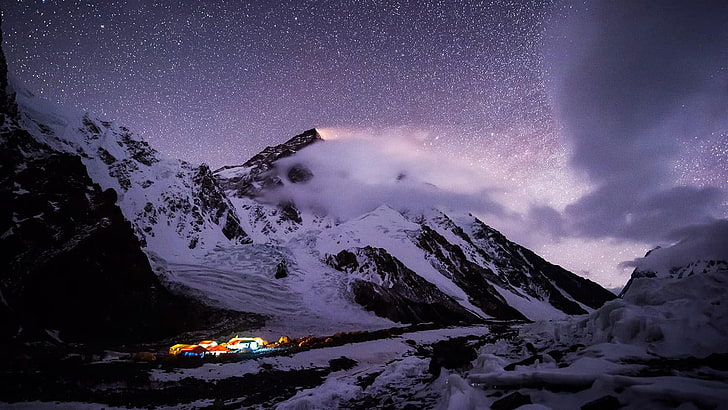
K2 (8,611m) is the world’s second highest mountain after Mt. Everest. It is located at the border between China and Pakistan. It is said to be one of the most technically difficult mountains to summit. The most popular routes to K2 is the Abruzzi Spur. Till date, many international expedition teams have succeeded in ascending to the summit of K2 via the Abruzzi Spur. The route leads us about 300 ft. up steep wind-packed snow towards the summit ridge. From the summit of K2, we can see the 360-degree view of Mount Gasherbrums (I-VII), Masherbrum, Mustagh Tower and Chogolisa. The summit lies vertically 650m above Camp 4 between 7,520m and 8,000m.
OUR TEAM
Extraordinary feats require extraordinary skills and preparation, and the safety and well-being of our expedition members is our principal concern. When you join our accomplished teams, you are in the most skillful and qualified hands in the mountains. Our real-world experience makes the crucial difference between a successful summit and an attempted one.
TRAINING REQUIREMENTS FOR 8000ERS
At least one 6000m peak climbing is recommended to gain experience in climbing high-altitude mountains. In addition, you will be able to examine your physical limits, you will be able to access your technical skills, and you will be able to evaluate your acclimatization requirement.
RECOMMENDED PHYSICAL TRAINING
(Start 90 days before the expedition)
TRAINING WE PROVIDE AT BASE CAMP BY OUR CLIMBING INSTRUCTOR
Using Rappelling Devices, traverse, duck walk, classical/ flat-footing, using oxygen, mask, regulator, and other safety devices, ice climbing practice, traversing, ladder crossing, fixed lines, diagonal ascent/ descent, etc.
OUR VALUES
T.G. TREKS Pvt. Lt. is managed by Sherpas with a combined mountaineering experience of 6 decades. All our personnel are from the Mountain regions of Nepal and their care and safety is as important to us as our clients. We do not cut costs, but offer you competitive rates that does not affect or jeopardize the safety of the members of the expedition.
We do not cater to mass tourism and are proud of expeditions we are committed to each year. We are unwavering in our obligations to provide our clients with a safe, comfortable, experiential experience they have invested so much in.
45 Days
An immense, dramatic peak rising far above its surrounding terrain, Nanga Parbat also notoriously difficult climb. It has three vast faces. The Raikot face is dominated by the north and south silver crags and silver plateau. The Diamir face is rocky in the beginning. It converts itself into ice fields around the higher end of the peak. The Rupal face is the highest precipice in the world.
Nanga Parbat has tremendous vertical relief over local terrain in all directions. To the south, Nanga Parbat boasts what is often referred to as the highest mountain face in the world: The Rupal Face rises 4,600 m (15,090 ft) above its base. To the north, the complex, somewhat more gently sloped Raikot Flank rises 7,000 m (22,966 ft) from the Indus River valley to the summit in just 25 km (16 mi), one of the 10 greatest elevation gains in so short a Hight on Earth. Nanga Parbat is one of only two peaks on Earth that rank in the top twenty of both the highest mountains in the world. It was first climbed in 1953 by Austrian climber Hermann Buhl. However, it was the dramatic moment of summit time as the all members of Austrian team have left back accepting BHUL: He continued alone. Finally, he succeeded to summit. Buhl is the only climber who made the first ascent of an eight-thousand without oxygen
45 Days
Thoughtful thoughts to your inbox
Copyright © 2025 by TG Tour
Designed and Developed by: Beetechsolution.com
